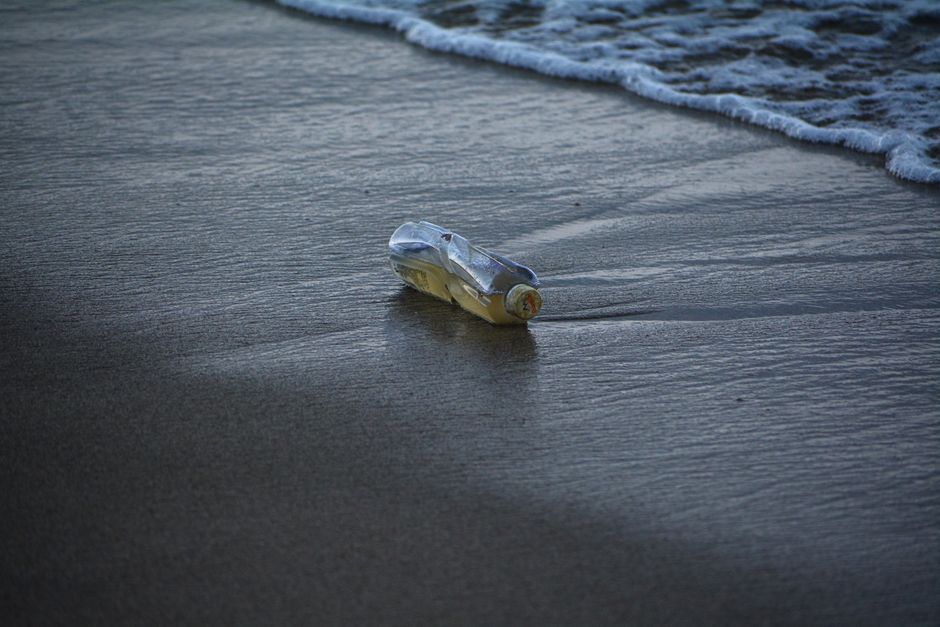
The phrase "ocean plastic" can make the problem sound distant, something that happens on shipping lanes far out to sea. A great deal of it, though, begins in towns and cities. Understanding how rubbish gets from a pavement to a beach makes the connection between everyday habits and the health of the ocean much clearer.
The journey: street to river to sea
Litter dropped on a street rarely stays put. Wind rolls light items into gutters, and rain does the rest. Water sweeps rubbish into drains, which feed into streams and rivers, and rivers carry it steadily towards the coast. By the time a wrapper reaches the sea, it may have travelled a long way from where it was dropped. This is why litter is a water problem even in places nowhere near the ocean, and why a bin used inland protects a beach downstream.
A simple rule of thumb: if rain can reach it, the sea can too. Anything left on open ground has a route to a watercourse.
Why plastic is different
Plenty of litter is unpleasant, but plastic is uniquely persistent. Where paper and food waste rot away, plastic does not truly break down for a very long time. Instead, sunlight and the constant motion of water make it brittle and cause it to fragment into ever smaller pieces. A single bottle becomes hundreds of shards; those shards become smaller still.
Microplastics
The smallest fragments are known as microplastics: tiny pieces of plastic small enough to be swallowed by creatures throughout the food chain, from plankton to fish. Some microplastics come from larger litter wearing down; others enter the water already small, from sources such as synthetic fibres and worn materials. Once dispersed they are effectively impossible to gather up, which is the strongest argument for stopping plastic reaching the water in the first place. The point about persistence appears again on cigarette butt litter, because those filters are made of plastic and fragment in the same way.
What marine debris does
To wildlife
Marine animals become tangled in netting and packaging, or swallow fragments they take for food. The patterns mirror those on land; see litter and wildlife.
To coasts
Debris accumulates on shorelines, spoiling beaches and burdening the volunteers and communities who clear them.
To the wider system
Because plastic lasts so long and spreads so widely, it becomes a lasting presence in the marine environment rather than a passing mess.
What actually helps
Clearing plastic from open water is slow, costly and only ever partial. The far more effective lever is upstream: keeping litter out of drains and rivers before it can travel. That includes ordinary care with rubbish, reducing the amount of single-use plastic we use at all, and taking part in cleanups near water where debris collects.
- Bin rubbish securely, especially light plastic that blows away easily.
- Cut down on single-use plastic — see reduce, reuse, recycle.
- Join a shoreline tidy-up using the beach cleanup guide.
- Remember that inland litter still reaches the sea, so care matters everywhere.
Marine litter is a striking example of how local actions add up to a global outcome. The chain from a dropped item to the open ocean is real, which means the chain can be broken at the very first link. Explore related subjects on the topics page, or start with why litter matters.