Litter is remarkably predictable. Look closely at any littered street or shoreline and the same items appear again and again. Each has its own reasons for being harmful, and each has a simple alternative. Here are the usual suspects.
Plastic bottles
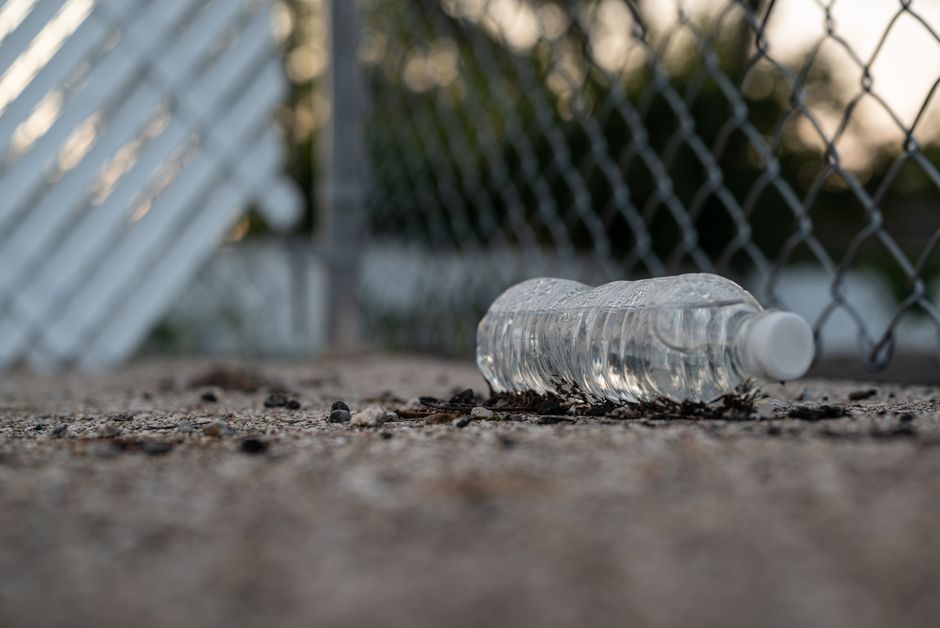
Drinks bottles are among the most common and longest-lasting litter. Plastic doesn't rot away; instead it breaks into ever-smaller fragments — microplastics — that spread through soil, water and the food chain and are practically impossible to remove once loose. A bottle dropped today can persist for a very long time. Refilling a reusable bottle removes the item entirely.
Plastic bags
Lightweight bags blow easily from bins and pockets, snag in trees and hedges, and float in water where wildlife can mistake them for food or become entangled. Like all plastic, they linger and fragment rather than disappear. A folded reusable bag in your pocket solves it.
Wrappers and food packaging
Crisp packets, sweet wrappers and takeaway packaging are everywhere because they're used briefly and thrown away carelessly. Many are made of mixed materials that are hard or impossible to recycle, so they mostly end up as litter or waste. They're light enough to travel far on the wind, which is how they reach rivers and beaches.
Drinks cans
Aluminium and steel cans are highly recyclable, which makes them especially wasteful as litter — a dropped can is valuable material thrown away. Left outdoors they can have sharp edges once crushed, posing a hazard to people, pets and wildlife.
Cigarette butts
Butts are the most numerous litter item of all, and often overlooked because they're small. The filter is made of a form of plastic, not paper, so it doesn't simply dissolve; it lingers and can leach trapped toxins into soil and water. Their sheer number makes them a major problem — there's a whole page on cigarette-butt litter.
Chewing gum
Gum is a stubborn, often-forgotten litter. Modern gum is based on a synthetic, rubbery polymer, so once trodden into a pavement it hardens and sticks fast. Removing it needs specialist equipment and is slow and costly, which is why so many high streets are speckled with old grey spots. A bin — or a wrapper folded around it — avoids the whole problem.
Fishing gear
Lost and discarded fishing line, nets, hooks and tackle are a serious hazard in and around water. Line and netting entangle birds, fish and mammals, and lost gear can keep trapping wildlife long after it's abandoned. Hooks and weights add further danger. Anglers taking every scrap of line and tackle home makes a real difference.
The common thread
Nearly all of these are single-use items that were cheap to produce and quick to discard. That's also the good news: the same short list appears everywhere, so a few habits — carrying a reusable bottle and bag, binning butts and gum, and taking gear home — cut the bulk of everyday litter. See reduce, reuse, recycle for how to avoid creating this waste, and the true cost of litter for what it all adds up to.
Browse every topic on the topics page.